TL;DR Choosing a wedding ring comes down to five decisions: metal, width and profile, finish, ring size and where you buy. Get the metal right and the rest follows. Gold is classic and easy to resize, platinum is dense and hypoallergenic, and palladium sits between them on price. Tungsten and titanium are cheap and tough but nearly impossible to resize. Always check for a UK hallmark, which is a legal requirement on most precious metal rings. Measure your finger late in the day when it is warm, because a wide band fits tighter than a thin one. Read the returns policy before you pay, since made to order and engraved rings are usually exempt from the 14 day cancellation right. Set a budget that includes sizing, engraving and insurance, not just the sticker price. Wear it for years, not weeks, so choose comfort over trend.
You will wear this ring every day, through hand washing, gym sessions, gardening and a lot of door handles. Yet most people spend more time choosing a sofa. Whether you plan to buy wedding rings online or in a jeweller’s shop, the choices come at you fast: metal, width, shape, finish, size, price. Pick badly and you end up with a band that spins, itches or looks tired after two years.
The good news is that the decision is far less mysterious than the jewellery industry makes it sound. This guide walks through what actually matters, what is just marketing, and how to protect yourself as a UK buyer.
Quick Answer: To buy wedding rings you will love, choose a metal that suits your lifestyle and skin, a width and profile that feel comfortable, and an accurate ring size. Check for a UK hallmark, compare the total cost including sizing and insurance, and confirm the returns policy before paying.
What Is Buying a Wedding Ring?
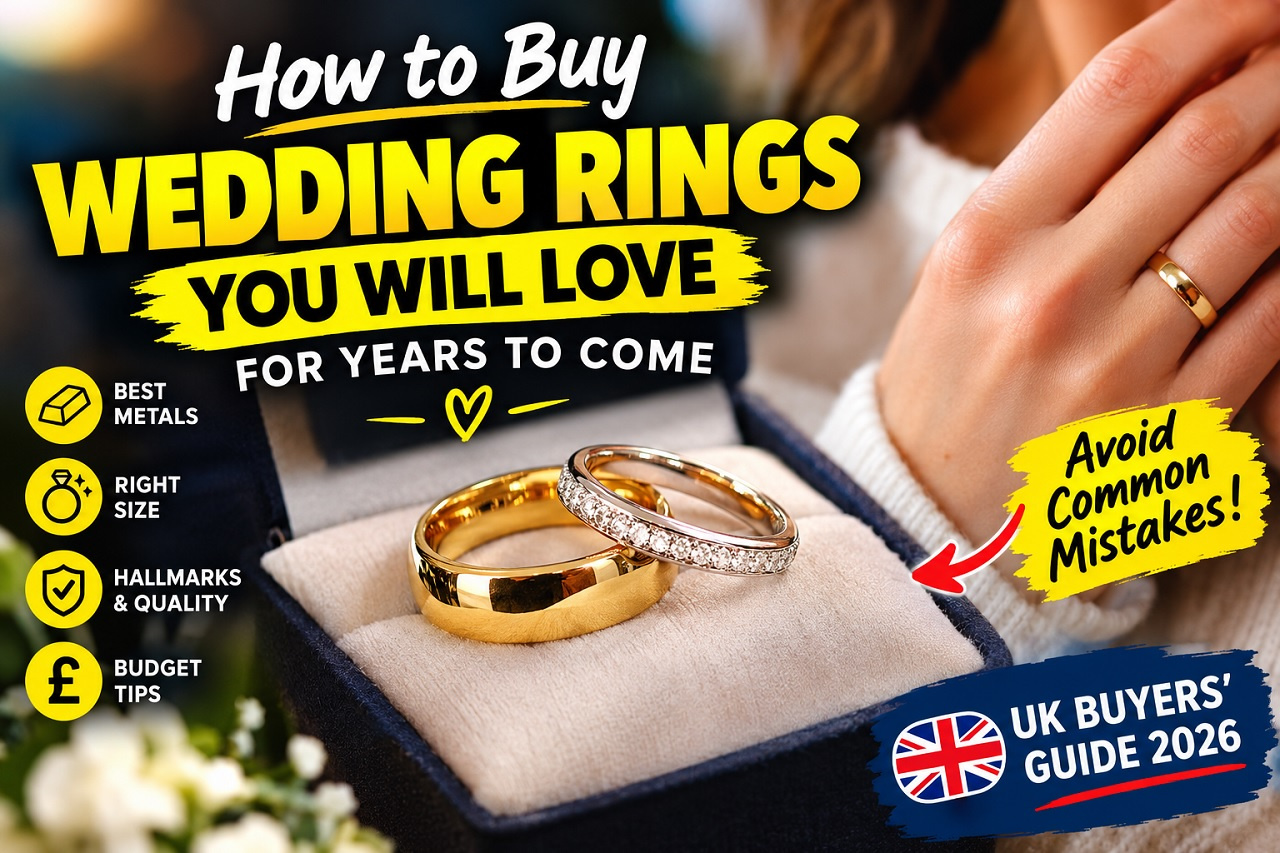
Buying a wedding ring means selecting a plain or lightly decorated band, usually made from gold, platinum or palladium, to be worn on the ring finger as a symbol of marriage or commitment. In the UK it is traditionally worn on the left hand. The purchase involves choosing a metal, width, profile and finish, confirming the correct ring size, and buying from a seller who supplies a hallmarked, properly documented piece.
Start With Intent: What You Are Really Shopping For
Before you look at a single ring, answer one question honestly. How do you live?
A nurse who washes her hands forty times a shift has different needs from an accountant who rarely does anything rougher than typing. A climber, a chef and a gardener will all knock a ring around more than most. Your daily habits should narrow the field before your taste does.
The second question is whether you want a ring that matches your partner’s or one that stands alone. Matching sets are lovely but not required. Plenty of couples choose different metals and widths and simply share an engraving or a finish.
Most people who set out to buy wedding rings jump straight to browsing designs. Start with lifestyle and budget instead, and your shortlist gets much shorter.
Summary box: Decide on lifestyle, budget and whether the rings should match before you browse. It saves hours and regret.
Choosing the Metal
The metal decides how your ring looks after ten years, how it feels on your finger, how much it costs and whether a jeweller can ever alter it.
Gold
Gold remains the most popular choice in the UK. Purity is measured in carats. 9ct gold is 37.5 percent gold, 18ct is 75 percent and 22ct is about 91.6 percent. Higher carat means richer colour and softer metal. 9ct is hardest wearing and cheapest, 18ct is the usual sweet spot for people who want a warmer colour, and 22ct is lovely but dents more easily.
Gold comes in yellow, white and rose. White gold is usually plated with rhodium, which wears off over time and needs re-plating every few years. Rose gold gets its colour from copper, which makes it quite durable.
Platinum
Platinum is naturally white, dense and typically supplied at 95 percent purity. It does not tarnish and rarely causes skin reactions. Over time it develops a soft, brushed patina rather than losing metal, which some people love and others see as scratching. It costs more than gold and feels noticeably heavier.
Palladium
Palladium belongs to the same metal family as platinum, with a similar white look and lower weight. It is usually cheaper than platinum and also suits sensitive skin. It is a sensible choice if you want a white metal without the platinum price.
Silver, Tungsten, Titanium and Others
Sterling silver is affordable but tarnishes and scratches, so it suits occasional wear better than daily wear. Tungsten carbide and titanium are tough, light and budget friendly. The catch is that they generally cannot be resized, and tungsten carbide can crack under sharp impact rather than bend. If your fingers change size, that is a real limitation.
| Metal | Typical look | Durability | Resizable | Relative cost | Skin sensitivity |
|---|---|---|---|---|---|
| 9ct gold | Paler yellow | High | Yes | Low | Occasional nickel issues in some alloys |
| 18ct gold | Rich yellow, white or rose | Medium | Yes | Medium to high | Low |
| Platinum | Bright white | Very high, develops patina | Yes, by a specialist | High | Very low |
| Palladium | Soft white | High | Yes | Medium | Very low |
| Titanium | Grey | Very high | Generally no | Low | Very low |
| Tungsten carbide | Dark grey or polished | Very hard, can shatter | No | Low | Low |
Summary box: Gold is the easy all rounder, platinum is premium and skin friendly, palladium is the value white metal, and tungsten or titanium trade resizing for toughness.
Width, Profile and Comfort
Most wedding bands fall between 2mm and 8mm wide. A narrow band looks delicate and is easy to forget you are wearing. A wide band makes a statement but fits tighter, because more of the finger is covered.
Profile means the shape of the band seen from the side:
- D shape: Rounded outside, flat inside. A very common and comfortable choice.
- Court: Rounded inside and out. Sits more smoothly on the finger and is often marketed as comfort fit.
- Flat: A modern, architectural look. Can feel sharper at the edges unless softened.
- Bevelled or knife edge: More decorative, but can catch on clothing and wear at the angles.
Try on a few shapes in person if you can, even if you plan to order online. Two rings of the same width and metal can feel very different. If you cannot try them in a shop, a court profile is a safe place to start.
Finish matters for how a ring ages. A high polish looks stunning and shows every scratch within weeks. Matte, brushed and hammered finishes hide wear well, and a jeweller can refresh any of them.
Getting Your Ring Size Right
UK sizes use letters, such as N or R, while many online shops also list US and EU sizes, so check which scale you are reading.
A few practical rules from jewellers:
- Measure late in the day. Fingers are smaller when cold and in the morning, and larger when warm and after exercise.
- Measure more than once. Do it on two or three separate days.
- Allow for width. A 6mm band usually needs to be half a size to a full size bigger than a 2mm band.
- Mind the knuckle. The ring has to pass over it, so a size that suits the base of the finger may be too snug at the knuckle.
- Expect changes. Pregnancy, weight changes, heat and age can all shift your size.
If you are ordering online, ask for a ring sizer and use it for a few hours. A proper sizer is far more reliable than a printed paper chart.
Summary box: Measure late in the day, more than once, and adjust for width. When in doubt, choose a seller with a free resizing policy.
Hallmarks and Quality Checks
In the UK, precious metal items above a minimum weight must carry a hallmark applied by an Assay Office. The thresholds are 1 gram for gold, 7.78 grams for silver, 0.5 grams for platinum and 1 gram for palladium. Most wedding rings in those metals exceed them, so a genuine ring should be hallmarked.
A full UK hallmark shows three things: the sponsor’s mark identifying who submitted the piece, the metal and fineness mark such as 750 for 18ct gold or 950 for platinum, and the mark of the Assay Office that tested it. Look at it under a loupe or magnifying glass. If it is missing, blurry in a suspicious way or the seller cannot explain it, walk away.
Other checks worth making:
- Ask for a description or certificate that matches the hallmark.
- Check the inside finish. It should be smooth, with no rough edges.
- Look at the joins and any engraving for even, crisp work.
- Ask about metal sourcing. If it matters to you, look for recycled gold or Fairtrade certified gold.
Budget: What a Wedding Ring Really Costs
Prices swing enormously with metal weight, width and the gold price on any given day, so be wary of anyone quoting a flat figure for all wedding rings. Instead, build your budget from the components:
| Cost item | What to ask |
|---|---|
| The ring itself | Is the price based on weight, and is it hallmarked? |
| Resizing | Is the first resize free, and is there a time limit? |
| Engraving | Is it included, and does it affect returns? |
| Insurance | Can it be added to home contents cover or a separate policy? |
| Aftercare | Are cleaning and polishing services offered? |
| Delivery | Is it insured and signed for? |
A heavier, wider ring in the same metal costs more simply because it contains more metal. If your budget is tight, go slightly narrower or choose a lower carat rather than compromising on hallmark and finish quality.
Summary box: Budget for the ring plus sizing, engraving and insurance. Weight and metal drive price more than brand name.
Buying Online vs In Store
Both routes work. They suit different people.
| Factor | Online | In store |
|---|---|---|
| Choice | Usually wider | Limited to stock |
| Price | Often lower overheads | Often higher |
| Try before you buy | Only with sizers or return options | Yes |
| Advice | Chat, email, phone | Face to face |
| Custom orders | Common | Common |
| Returns | 14 day cancellation right for standard items | Depends on shop policy |
Under UK consumer law, when you buy at a distance you generally have 14 days to cancel after receiving standard goods. That right does not usually apply to items made to your specification or personalised, such as an engraved ring or a custom made size. Check the wording on the product page before you order.
If you want to buy wedding rings online, look for clear photos of the hallmark, transparent pricing, a stated resizing policy and a real contact number. A seller who is vague on any of those points is telling you something.
What Most People Misunderstand
A few myths come up again and again in forum threads and jewellery communities:
- “Platinum never scratches.” It does. It simply displaces metal rather than losing it, which creates a patina. Many owners polish it occasionally.
- “Tungsten is unbreakable.” It resists scratches brilliantly but is brittle and can shatter under a hard knock.
- “A higher carat is always better.” Not for daily wear. Softer metal marks faster.
- “The ring only needs to match the engagement ring in colour.” Matching metal helps, but a mismatch in hardness can wear the softer ring faster when they sit together.
- “You cannot resize a ring with an inscription.” Usually you can, though the engraving may need redoing.
Common Mistakes
- Buying on looks alone and ignoring comfort or daily wear.
- Guessing the size instead of measuring properly.
- Choosing a metal that cannot be resized without knowing your size may change.
- Skipping the hallmark check.
- Ignoring the return policy, especially for engraved or bespoke orders.
- Overspending on the ring and forgetting insurance.
- Leaving it too late. Made to order rings can take several weeks, so order well before the wedding.
What Experienced Buyers and Jewellers Recommend
People who have been through this tend to say the same few things:
- Try the ring on and wear it around for a few minutes if you can. Comfort shows up quickly.
- Choose a profile with softened edges for everyday wear.
- Keep it simple if you want it to last. Plain bands age more gracefully than heavily detailed ones.
- Think about how the wedding ring will sit next to an engagement ring, and ask a jeweller about fit and wear between the two.
- Store it safely during gym sessions, swimming and heavy cleaning.
- Ask what servicing the seller offers. A jeweller who will polish and resize years later is worth more than a small saving today.
Jewellers also advise couples who are not sure about metal to start with how they feel about maintenance. If you want something you never think about, palladium, platinum or a harder gold alloy suits better than a rhodium plated white gold ring.
Caring for Your Ring
A little routine goes a long way:
- Clean with warm water, mild washing up liquid and a soft brush.
- Remove it before using bleach or harsh cleaning products.
- Take it off for heavy lifting, DIY and gardening.
- Have prongs, joins and any settings checked once a year.
- White gold may need re-plating every few years to keep its colour.
- Store it separately from other jewellery to avoid scratches.
People Also Ask
What should I look for when buying a wedding ring?
Look for the right metal for your lifestyle, a comfortable width and profile, a verified hallmark, an accurate ring size and a clear returns and resizing policy.
What is the best metal for a wedding ring?
There is no single best metal. 18ct gold suits most people, platinum suits sensitive skin and long term wear, and palladium is a good lighter, cheaper white metal.
Which hand does a wedding ring go on in the UK?
Traditionally the left hand, on the fourth finger. Some people wear it on the right, and that is perfectly acceptable.
How much should I spend on a wedding ring?
There is no set rule. Base it on what you can comfortably afford, then check that the figure covers sizing, engraving and insurance.
Can wedding rings be resized?
Gold, platinum and palladium bands can usually be resized by a qualified jeweller. Tungsten carbide and many titanium rings generally cannot.
FAQ
How do I know which wedding ring size to buy?
The most reliable method is a proper ring sizer, worn for a few hours at the end of the day. Fingers are at their largest in the evening and when warm, so measuring then avoids a ring that slides off in cold weather. Do it on two or three different days and take the most consistent reading. Remember that wider bands fit tighter than narrow ones, so if you are choosing a 5mm or 6mm band, you may need to go up half a size. If you land between sizes, choose the larger one, because it is easier to make a ring slightly snugger with a sizing bead or resize than to wrestle a tight one over your knuckle. Many sellers offer free or discounted resizing within a set period, so check that before you order.
Is it safe to buy wedding rings online?
Yes, provided you pick a reputable seller and check a few things first. Look for a clear hallmark statement, detailed product descriptions with weights and metal purity, genuine reviews, a visible company address and a straightforward returns policy. Be cautious of prices that look far too good, missing hallmark details or sellers who avoid direct questions. Pay by credit card or another method with buyer protection where possible. Remember that personalised and made to order rings are usually excluded from the standard 14 day cancellation right, so read the terms before you confirm an engraving or custom size. If you are unsure of your size, order a ring sizer first.
What is the difference between 9ct and 18ct gold wedding rings?
The number shows how much pure gold is in the alloy. 9ct gold is 37.5 percent gold and 18ct is 75 percent. 9ct is harder, more affordable and more resistant to scratches, but it has a paler colour and contains more other metals. 18ct has a richer, warmer tone and is more valuable, but it is softer and may show wear sooner. Both can be hallmarked, resized and engraved. For a ring you plan to wear every day without much fuss, many people choose 9ct for toughness and value, while those who prioritise colour and feel often prefer 18ct.
Should my wedding ring match my engagement ring?
It does not have to, but there are practical reasons to think about it. Rings that sit side by side rub against each other, and a softer metal will wear faster next to a harder one. Matching metals and similar hardness reduce uneven wear. Visually, matching creates a unified look, though plenty of people deliberately mix metals for contrast. If your engagement ring has a raised setting, ask a jeweller about a shaped or curved band that sits flush against it. Bring the engagement ring when you shop so you can see how the two sit together.
What should I do if my wedding ring does not fit after buying?
Contact the seller as soon as you notice, and check the resizing policy. Many jewellers offer one free resize within a set period. If the ring was made to order or engraved, you may not be able to return it for a refund, but resizing is often still possible. Avoid resizing it yourself or taking it to an unqualified repairer, since poor work can weaken the band or damage the hallmark. For metals that cannot be resized, such as tungsten carbide, you may need to exchange it, which is why checking the policy before buying is so important.
The best wedding ring is not the most expensive one or the most fashionable. It is the one that fits well, suits how you live and is made honestly from a metal you trust. Take your time over the decisions that matter, check the hallmark, measure properly and read the small print. Do that, and you will have a ring you forget you are wearing in the best possible way.
Key Takeaways
- Choose the metal around your lifestyle, skin and budget.
- Palladium and platinum suit sensitive skin. Gold is easiest to resize.
- Tungsten and titanium are tough but generally cannot be resized.
- Measure your size late in the day, more than once, and allow for band width.
- Check for a full UK hallmark on gold, platinum and palladium rings.
- Personalised and made to order rings are usually exempt from the 14 day cancellation right.
- Budget for resizing, engraving and insurance as well as the ring.
- Order early, as bespoke rings can take weeks.